> For the complete documentation index, see [llms.txt](https://docs.scopescan.ai/llms.txt). Markdown versions of documentation pages are available by appending `.md` to page URLs; this page is available as [Markdown](https://docs.scopescan.ai/features/discovery-mode/wallet-profile.md).

# Wallet Profile

<figure><img src="/files/NebflHddB9sddfvZF2fz" alt=""><figcaption></figcaption></figure>

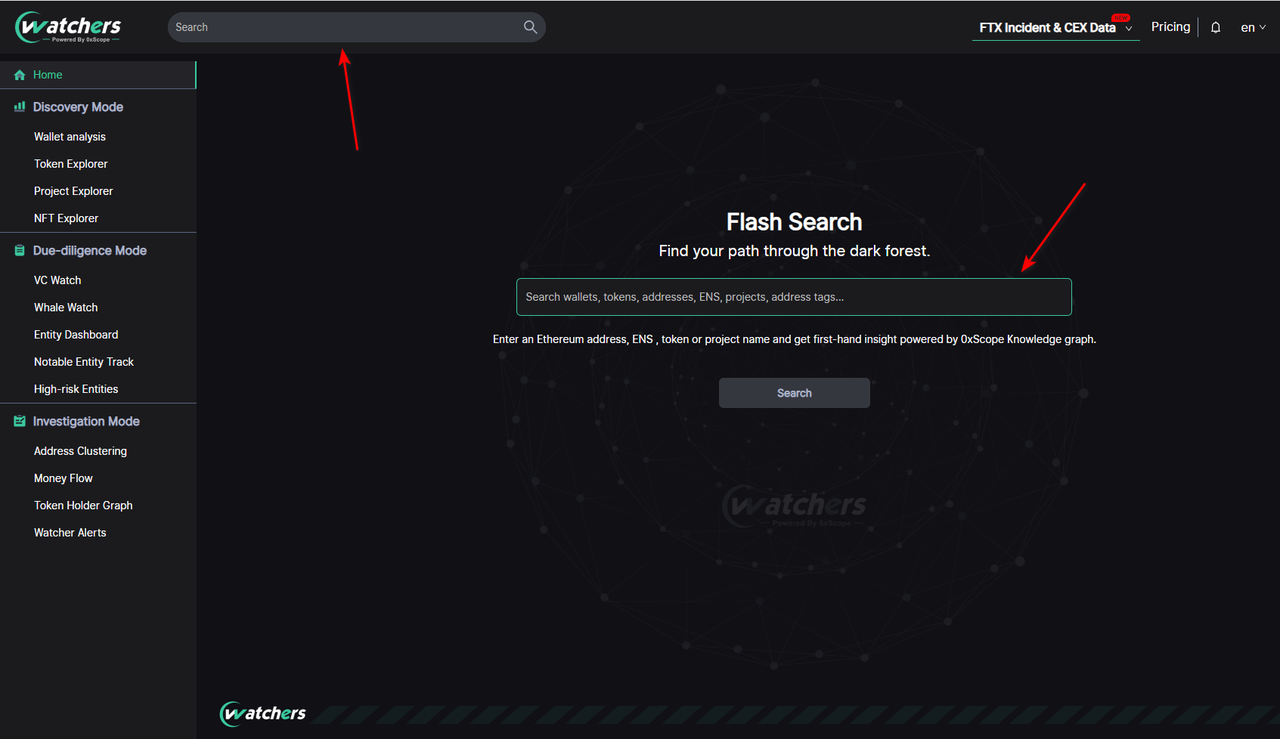
Start by entering an Address, or ENS, in the home page search bar or the top navigation bar. And you will get:<br>

<figure><img src="/files/xvjNweVL70E2KX8ZWUYl" alt=""><figcaption></figcaption></figure>

#### Basic information:

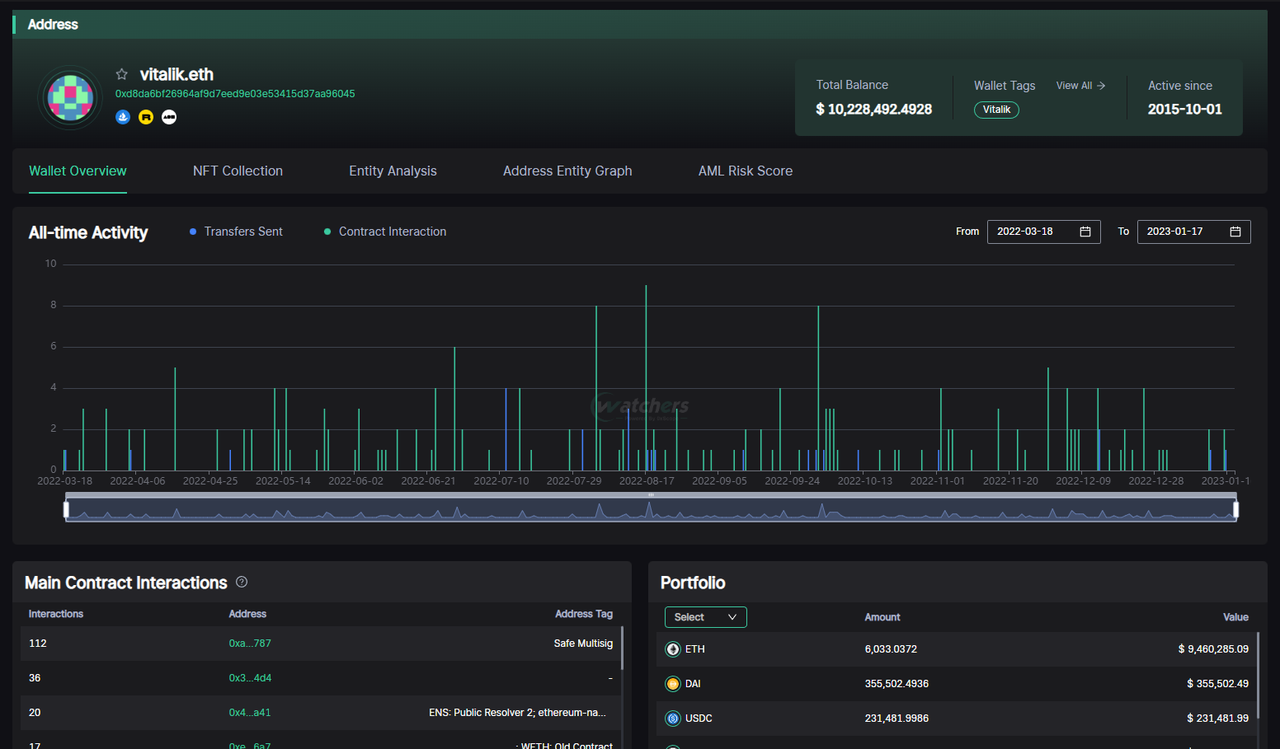
In addition to checking the address balance and creation time, Scopescan provides ID tags, on-chain behavior tags, and name tags as well as ENS registered and other social reveals, which provides web2 and web3 social media accounts associated with this address.

<figure><img src="/files/8JRrUTxVBUvin1iiijya" alt=""><figcaption></figcaption></figure>

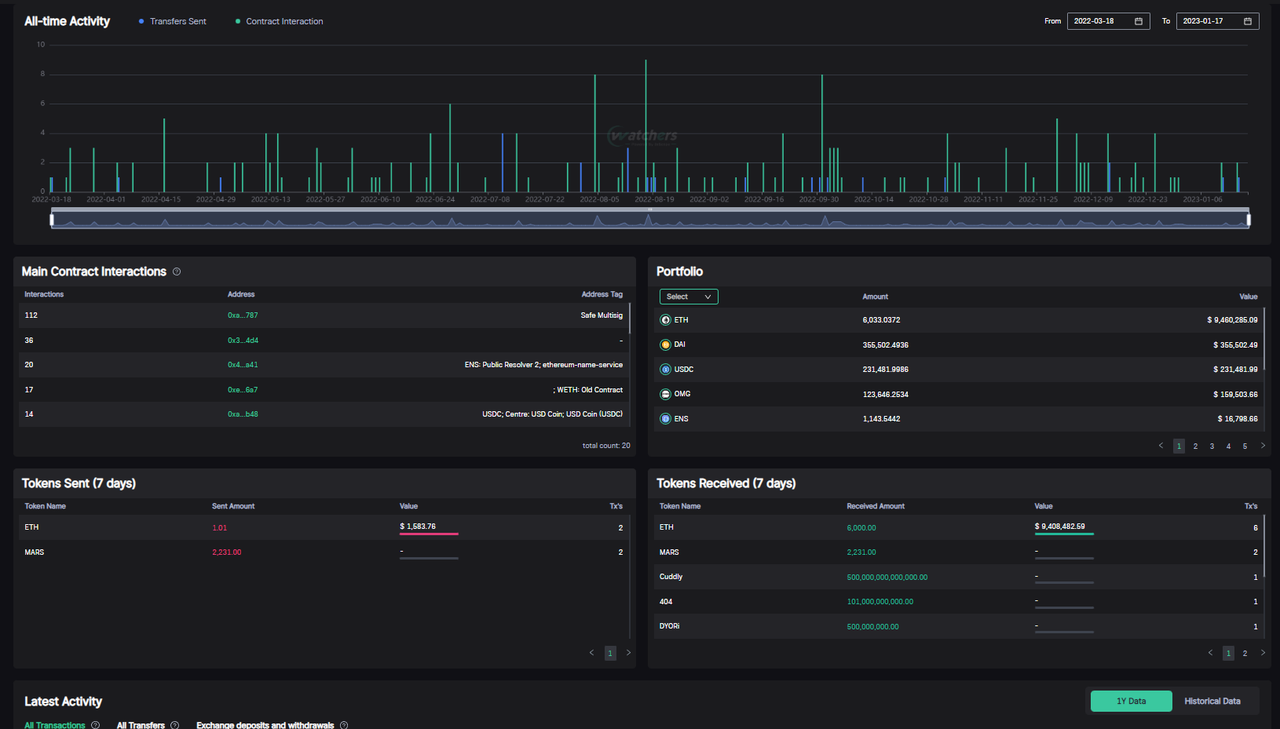
#### Wallet Overview:

Provides an overview of the activity chart, portfolio holdings, token transfers(7D), and main contract interactions.

<figure><img src="/files/cEvaK8Vnwweb7WEv49QC" alt=""><figcaption></figcaption></figure>

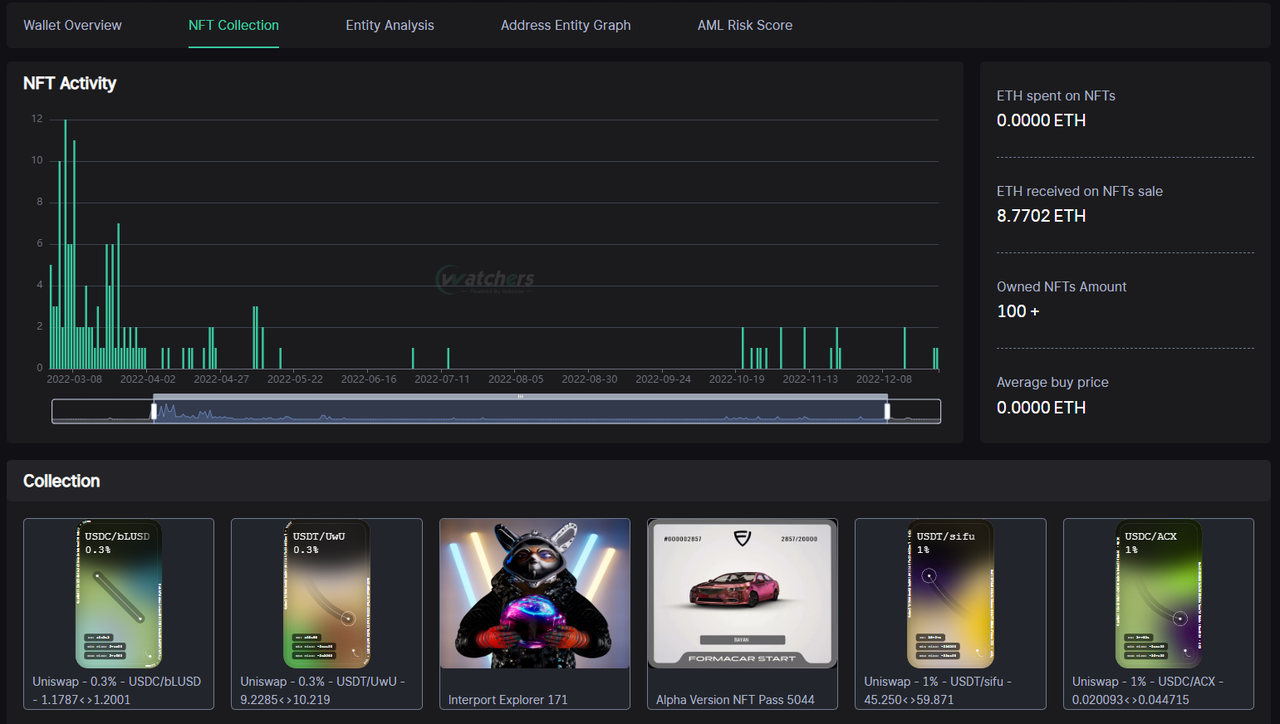
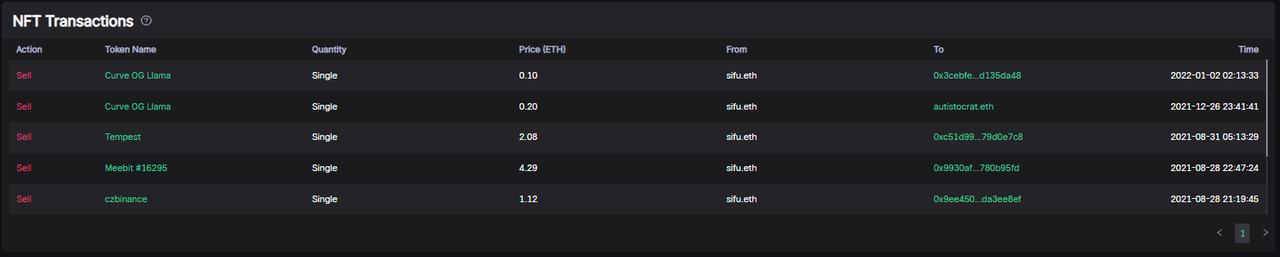
#### NFT Collection:

An overview of the address's NFT holdings and transactions.

<figure><img src="/files/8cLGIEomgWhqJVZrJnUR" alt=""><figcaption></figcaption></figure>

<figure><img src="/files/w1PqBqhwBNLMG7PPYqyg" alt=""><figcaption></figcaption></figure>

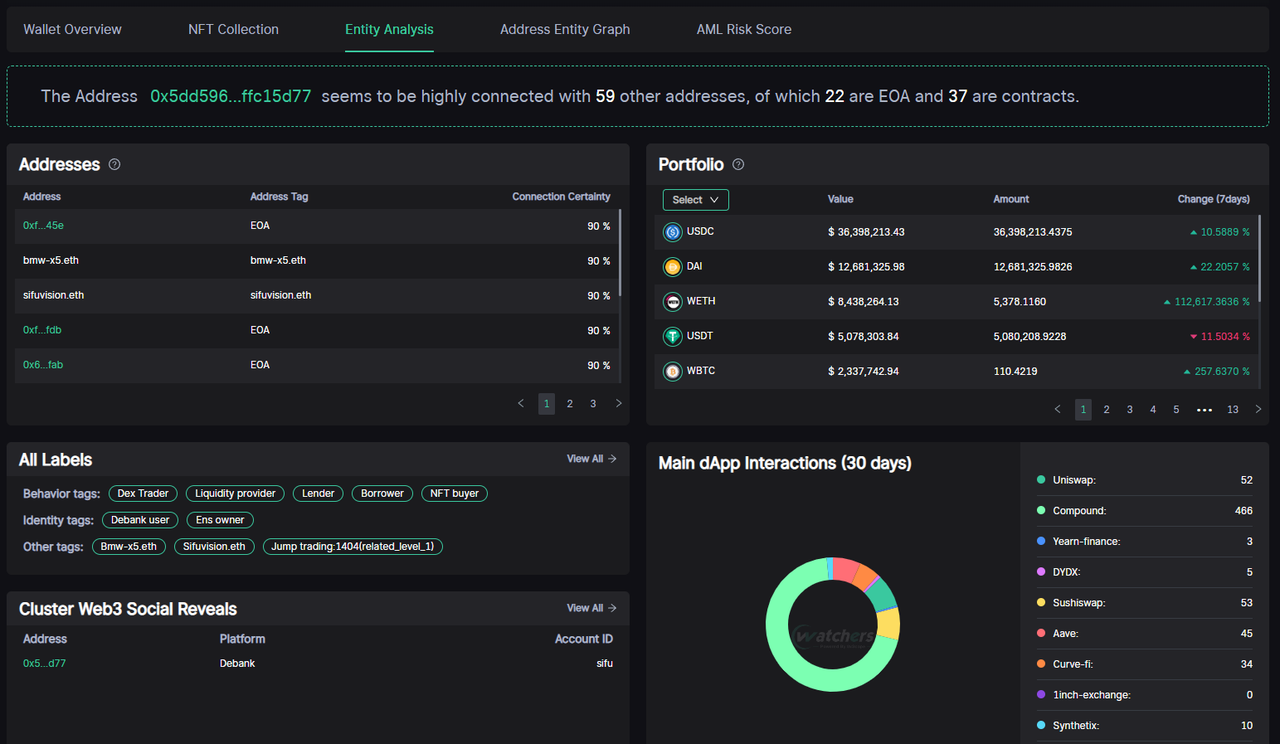
#### Entity Analysis:

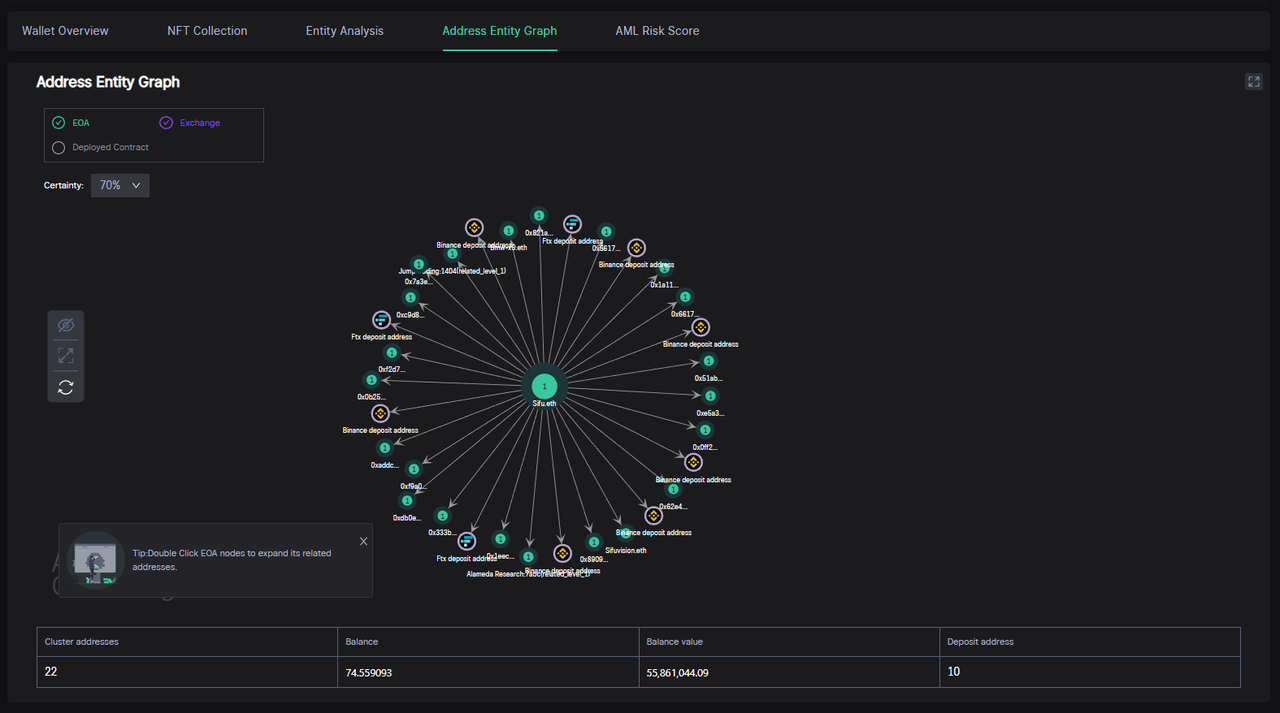
This page focuses on data from the address Entity (**Entity** refers to a cluster of addresses that are highly related to one address).

<figure><img src="/files/sWQZI2EnRtwLN9aLiD4Z" alt=""><figcaption></figcaption></figure>

#### Address Entity Graph:

A visual tool to analyze an address entity. You can see all EOA's, NFTs, and Exchange deposit addresses associated with the wallet. You are also able to visualize related clusters to do your own research and conclusions.

Check detail at

{% content-ref url="/pages/sW56zYSDkGWho9uMnAIz" %}
[Address Clustering](/features/investigation-mode/address-clustering.md)
{% endcontent-ref %}

<figure><img src="/files/c7gMNMDtbFypCX81vgPX" alt=""><figcaption></figcaption></figure>

<figure><img src="https://ygyixithcq.feishu.cn/space/api/box/stream/download/asynccode/?code=NWQ2MzM1ZGQ3NjcxMmE3OWI4ZDY4NGU5ZDI2YWFjMjJfVTY3R2haODNRazRHTWdmUXVTeGJ0RGxxYUViZUNGVURfVG9rZW46Ym94Y24xRkt6M3VobnFDS0ZCWW9LSWE0dHNiXzE2NzQwMzM0ODA6MTY3NDAzNzA4MF9WNA" alt=""><figcaption></figcaption></figure>

#### AML Risk Score

Check detail at

{% content-ref url="/pages/ZIzJ2M6QaFOgLX1Vxfdu" %}
[AML Risk Score](/aml-risk-score.md)
{% endcontent-ref %}

---

# Agent Instructions
This documentation is published with GitBook. GitBook is the documentation platform designed so that both humans and AI agents can read, navigate, and reason over technical content effectively. Learn more at gitbook.com.

## Querying This Documentation
If you need additional information that is not directly available in this page, you can query the documentation dynamically by asking a question.

Perform an HTTP GET request on the current page URL with the `ask` query parameter, and the optional `goal` query parameter:

```
GET https://docs.scopescan.ai/features/discovery-mode/wallet-profile.md?ask=<question>&goal=<endgoal>
```

`ask` is the immediate question: it should be specific, self-contained, and written in natural language.
`goal` is optional and describes the broader end goal you are ultimately trying to accomplish on behalf of the user. GitBook uses it to tailor the answer towards what is most useful for that goal.

The response will contain a direct answer to the question and relevant excerpts and sources from the documentation.

Use this mechanism when the answer is not explicitly present in the current page, you need clarification or additional context, or you want to retrieve related documentation sections.